A sudden breakdown is stressful and can be dangerous. Knowing when to stop and call a professional tow saves time, money, and worry, especially on Kent’s busy roads. In this guide, we lay out five clear, practical signs that mean your car should be recovered rather than driven on.
You’ll learn how to read warning lights, identify worrying noises, spot smoke or leaks, and decide between a tow truck and simple roadside help. It also covers on-scene safety for Kent drivers and how a local recovery team can help quickly.
Read on for plain-English checklists, quick decision tables, and immediate actions that put safety first and answer common questions such as when to tow, which car breakdown symptoms to watch for in Kent, and when to call a tow truck.
What are the most common car breakdown symptoms that mean you need a tow?
Here are the five most common signs that your car should be towed: sudden loss of drive power, persistent critical dashboard lights, very loud or unusual noises and burning smells, visible smoke or fluid leaks, and repeated starting failures.
Each point refers to a different mechanical or electrical issue that can get much worse if you keep driving. Spot these signs early, pull over safely, and call for professional recovery to avoid turning a small fault into a major repair. Below, we explain each sign and the immediate action to take.
- Loss of drive power while accelerating or climbing hills often means engine, fuel, or transmission trouble and usually means the car needs towing.
- Persistent critical dashboard warnings (engine, oil pressure, battery, temperature), don’t keep driving if these are lit.
- Loud grinding, knocking, or a strong burning smell suggest mechanical failure or overheating that can worsen quickly.
- Visible smoke or active fluid leaks beneath the car, stop straight away and arrange recovery.
- Repeated no-start with clicks or no crank, this often points to a faulty starter, alternator, or deeper electrical faults that require recovery.
The table below summarises each symptom, the likely cause, and the immediate action to help you decide if a tow is required.
| Symptom | Likely Cause | Recommended Immediate Action/Service |
|---|---|---|
| Loss of power / severe hesitation | Fuel delivery, transmission, or engine faults | Pull over safely; then call for towing or breakdown recovery |
| Critical dashboard lights are illuminated | Low oil pressure, engine management faults, overheating | Stop driving; arrange professional recovery |
| Grinding/knocking noises | Transmission or internal engine damage | Do not continue driving; request a tow |
| Visible smoke or fluid leak | Coolant, oil, or fuel leak; overheating | Exit the vehicle safely; call emergency towing |
| Repeated no-start | Flat battery, starter, or complex electrical fault | If a jump start fails, arrange vehicle recovery |
Use this quick comparison to judge whether a roadside fix is reasonable or if calling a tow is safer.

Dashboard Warning Lights That Mean You Need a Tow
Warning lights are the car’s first line of defence; treat the serious ones as a prompt to stop. An oil pressure warning often means the engine isn’t getting enough lubrication; driving on risks seizure, so stop as soon as it’s safe.
A check engine light combined with poor performance or stalling can indicate faults that will worsen if driven; in those cases, choose towing over continuing. A battery or charging light that stays on while the engine runs can signal alternator failure. You may be able to limp to a safer spot, but persistent power loss means arranging recovery.
High temperature or coolant warnings show overheating; driving on can warp the head or cause major coolant loss, so stop and get help. Knowing what each light can mean helps you decide when towing is the safer option.
Unusual Noises and Smells That Signal Trouble
Noises and smells point directly to which part of the car is failing and how urgent the problem is. Grinding or whining from the transmission or differential often means gears or bearings are failing, driving on can destroy the drivetrain, so tow the vehicle.
Loud knocking or metallic noises from the engine usually indicate serious internal damage and mean you should arrange urgent recovery to avoid complete engine failure.
A sharp burning smell or acrid smoke may be an electrical short or an overheated clutch, while a sweet, syrupy smell normally means coolant escaping; both are reasons to stop and call recovery.
Quick, careful checks, looking for leaks under the car and smelling for fuel, can help prioritise a tow, but avoid prolonged checks on a hard shoulder and call a recovery provider if you suspect a major fault.
When should you call a tow truck instead of attempting roadside assistance?
Deciding between a tow truck and roadside assistance comes down to safety and whether the problem can be fixed safely at the roadside. Call a tow truck if there’s structural damage, heavy fluid loss, signs of internal engine or transmission failure, or if you can’t move the vehicle safely.
Simple tasks, fitting a spare tyre on a safe verge or a successful jump start, are suitable for roadside assistance, provided there are no deeper mechanical worries.
- Call a tow truck when the vehicle shows internal engine or transmission failure.
- Call a tow truck for major coolant, oil, or fuel leaks, or visible smoke.
- Use roadside assistance for a flat tyre if a usable spare is fitted and the car can be moved to safety.
- Use roadside assistance for a battery jump if the vehicle starts and then holds charge normally.
The table below makes it clearer which problems are usually roadside fixes and which almost always need towing, so you can decide quickly on Kent roads.
| Problem | Suitable for Roadside Assistance? (Yes/No) | When to Tow |
|---|---|---|
| Flat tyre with usable spare | Yes | If there is no spare or the wheel/axle is damaged, tow |
| Dead battery, simple jump start | Yes | If the vehicle won’t hold a charge or if electrical faults persist |
| Major oil or coolant leak | No | Tow immediately to prevent engine damage |
| Severe transmission slippage | No | To avoid further gearbox damage |
| Collision or structural damage | No | Tow for safe transport and assessment |
This comparison helps you avoid roadside attempts that could make the problem worse. The sections below explain the starting issues and performance problems in more detail.
Starting Issues That Need Professional Towing
Starting problems range from a flat battery to a failed starter or fuel system fault. If the engine cranks quickly and fires, a jump start or roadside assistance is usually enough. If you hear a single loud click with no crank, or nothing at all, that often points to a starter motor or deeper electrical fault; these typically need towing.
Quick checks include switching on the lights to see if the battery is flat and attempting a safe jump start from a secure spot. If a jump start fails, the battery won’t hold a charge, or you smell burning or see smoke when trying to start, stop attempting restarts and call recovery. Repeated cranking can worsen an electrical fault or damage the starter, so get professional help instead.
Performance Issues and Loss of Power That Mean You Need a Tow
Loss of power while driving can come from fuel delivery, ignition, turbocharger, or transmission faults, and is especially hazardous on busy Kent roads. Sudden drops in acceleration, surging or repeated stalling under load are red flags, pull over safely and arrange towing rather than struggling on to a garage.
Driving with reduced power can leave you stranded in traffic, increase collision risk, and cause more serious mechanical damage. If the car is in limp‑home mode, producing smoke, or a mix of warning lights and power loss, these combined signs mean you should not drive further.
Turn on hazards, get to a safe location if you can, and call for recovery. Recognising the pattern of symptoms helps you decide whether a roadside fix is realistic or whether towing for a full diagnostic check is the right choice.
How to recognise smoke and fluid leaks as signs you need emergency towing
Smoke and fluid leaks are among the most urgent signs that a vehicle needs emergency towing; they can indicate fire risk, brake failure, or imminent engine seizure. Different smoke colours and fluid types point to particular systems and danger levels; recognising these quickly lets you act and call for recovery when required.
The table below maps common smoke and fluid types to their likely meaning and the urgency of action.
| Smoke/Fluid Type | What It Means | Urgency Level / Action |
|---|---|---|
| White smoke from the exhaust | Coolant burning, possible head gasket or cracked component | High, stop, and tow |
| Blue smoke from exhaust | Burning oil, severe engine wear or oil leak | High, stop, and tow |
| Black smoke | Excess fuel, combustion issue or turbo problem | Medium‑High, stop and seek recovery |
| Clear/honey oil under the car | Engine oil leak | High, stop, and tow to prevent engine seizure |
| Green/bright coolant puddle | Coolant leak | High, stop immediately and arrange towing |
| Odour of petrol with wet spots | Fuel leak, fire risk | Very High, exit vehicle and call emergency towing |
Use this quick reference to decide whether to stop driving and call a tow. Keeping people safe and protecting the vehicle should be your priority. The next sections explain smoke colours and fluid identification in plain terms.
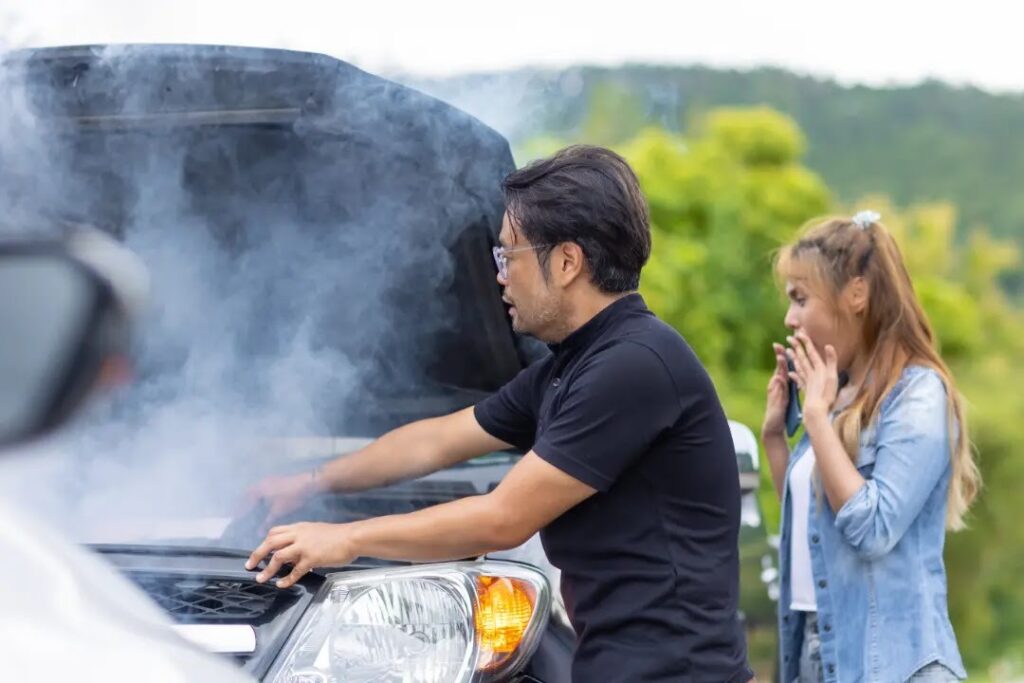
Smoke Types That Indicate Serious Engine Problems
Various smoke types from the exhaust or engine bay signal different faults and levels of urgency. Persistent white smoke usually means coolant is getting into the combustion chamber, a likely head gasket failure, or a cracked component, and should prompt an immediate stop.
Blue smoke points to oil burning inside the engine, which can indicate severe internal wear or leaks and usually requires professional towing to avoid catastrophic engine damage.
Black smoke shows a rich fuel mixture or turbo issues; it’s not always instantly catastrophic, but it signals poor combustion and potential further damage if driven.
A sharp, acrid, or electrical burning smell with visible smoke suggests wiring or component fire risk; evacuate the vehicle and call emergency recovery. Spotting and interpreting these smoke cues helps you protect passengers and the vehicle.
Why choose Reds Recovery Services for reliable 24/7 towing and breakdown recovery in Kent?
Reds Recovery Services offers 24/7 cover, fast local response across Kent, and a full range of recovery services, from jump starts to full vehicle transport.
Those capabilities match the most urgent scenarios we’ve described: around-the-clock availability for smoke, leaks, or immobilising faults; local crews to reduce roadside exposure; and the right equipment to avoid adding miles when a vehicle should be recovered. Choosing a nearby, specialist recovery team cuts waiting time and helps protect your vehicle from further damage.
Unique Benefits Reds Recovery Offers for Emergency Vehicle Recovery
Reds Recovery focuses on the essential drivers’ needs in an emergency: 24/7 availability, quick response across Kent, and flexible recovery options for cars and vans.
That means if you face a dead battery, a critical warning light, smoke, or a major leak, you can expect help at any hour, a rapid arrival to reduce roadside risk, and the correct recovery method, whether that’s a jump start, flatbed transport, or conventional towing. For anyone prioritising safety and minimising extra damage, these are the benefits that matter.
If you recognise any of the five signs above, contacting a local recovery provider like Reds Recovery helps you secure a safe, suitable outcome without unnecessary delay.
Reds Recovery’s Response Times Across Kent and Surrounding Areas
Reds Recovery aims for fast response times across Kent thanks to local coverage and crews based in the area. Exact arrival times depend on your location and traffic, but local teams generally reach you quicker than distant operators.
When you call, give your precise location and symptoms to get a realistic estimated time of arrival and the right level of assistance. Asking for an ETA when reporting smoke, leaks, or loss of power helps you plan and keeps everyone safer while you wait.
Frequently Asked Questions
What Should I Do If My Car Breaks Down In A Busy Area?
If you break down in a busy area, put safety first. If it’s possible and safe, move the car to a hard shoulder or lay‑by. Turn on your hazard lights to warn other drivers. If you can’t move the vehicle, stay inside with your seatbelt on until help arrives.
Call a recovery service and give your exact location and a brief description of the problem. Make sure passengers are away from the carriageway and safe.
How Can I Prevent My Car From Needing A Tow?
Regular maintenance is the best defence against breakdowns. Keep up with oil changes, brake checks, tyre rotations, and battery checks. Pay attention to dashboard warnings and get faults checked early. Keeping the cooling and fuel systems in good order and following the manufacturer’s service schedule reduces the chance of needing a tow.
What Are the Costs Associated With Towing Services?
Towing costs vary by distance, vehicle type, and time of day. Short local recoveries are generally cheaper than longer or specialist jobs. After-hours or weekend call-outs and vehicles needing special equipment can increase the price. Always ask the operator for an estimate and check for any extra fees before the job starts.
Can I Drive My Car After Experiencing Warning Lights?
It depends on the light and the symptoms. Critical warnings like low oil pressure, overheating, or major charging faults mean you should stop driving immediately. A check engine light on its own may be less urgent, but if you also notice poor performance, smoke, or loss of power, don’t drive on; call for recovery. When in doubt, stop in a safe place and get professional advice.