
Driving in Kent in winter takes a little extra care. A few simple checks and the right kit help cut the risk of a breakdown and keep you moving safely. Today, this guide covers key vehicle checks, what to pack, how to handle snow, ice, and fog, and what to do if things go wrong.
We keep the advice local, highlighting Kent-specific issues like coastal mist and rural lanes, and give clear, actionable steps to take before you set off.
You’ll find numbered checklists, essential item lists, and decision points to help you choose between self-recovery and calling a professional. Read on to make your winter journeys across Kent safer and more predictable.
How Do I Prepare My Car for a Safe Winter Road Trip?
Preparing your car for winter means checking the systems that affect traction, visibility, and starting reliability. Cold weather reduces battery capacity and tyre pressure, while dirty washer fluid and worn wipers cut visibility; each one raises the chance of trouble.
Do a short pre-trip check of tyres, brakes, battery, fluids, lights, and wipers; these quick steps lower the chance of a winter breakdown and make your drive safer. If a check reveals a fault you can’t fix, book a professional inspection or arrange recovery rather than starting a trip with an unresolved issue.
- Check tyre pressure and tread before any long drive; set pressures to the manufacturer’s cold spec and consider winter tyres if you expect ice or deep snow.
- Listen and feel for brake issues, grinding, pulsing, or long stopping distances that need professional attention.
- Test battery voltage and inspect terminals; clean any corrosion and replace a weak battery to avoid cold-start failures.
- Top up antifreeze to the correct concentration, use winter washer fluid, and fit fresh wiper blades for good visibility.
- Confirm all exterior lights work and clean their lenses to improve visibility in low light or fog.
- Pack essential emergency and recovery gear (see the emergency kit section) and check the weather along your route before you leave.
This checklist sets out the short actions to complete; the next sections explain key checks and how to judge battery and fluid readiness in cold weather.
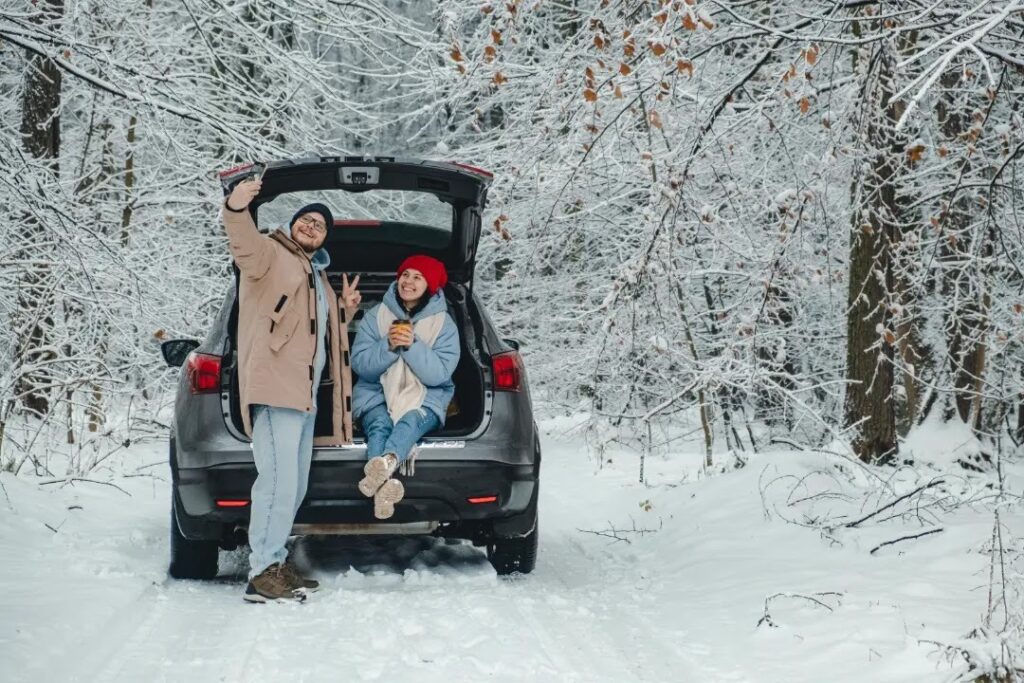
Crucial Vehicle Maintenance Checks Before Winter Travel
Focus maintenance checks on tyres, brakes, lights, and visibility; these have the biggest impact on control and what you can see. Measure tyre tread depth, less than 3 mm cuts wet and icy grip noticeably, and look for uneven wear that could mean alignment or suspension problems.
Check tyre pressures when the tyres are cold; pressure typically falls by around 1 psi for every 10 °C drop, so morning readings in winter will be lower. Inspect brake pads and discs for thinning, vibration, or long pedal travel, and act on any grinding sounds.
Check headlight lenses and indicators for condensation or clouding, and replace bulbs proactively. Regular checks reduce the chance of en-route failures and prime you to check the battery and fluids next.
Ensuring Your Battery And Fluids Are Winter-Ready
Batteries lose usable cold-cranking power as temperatures fall because the chemical reactions slow, so a marginal battery in autumn often fails in winter. Test voltage or have a professional perform a load test; resting voltages below about 12.4 V or slow cranking indicate you should replace or service the battery.
Clean battery terminals and ensure tight connections to avoid voltage loss. For fluids, confirm antifreeze concentration to prevent freezing, use a hydrometer or check service records to keep a 50/50 coolant mix where recommended, and swap to winter-grade screenwash to stop it refreezing on the windscreen.
Good battery and fluid upkeep cuts the odds of roadside breakdowns and visibility problems; keep a portable starter or roadside assistance plan as backup.
What Should I Include in a Winter Car Emergency Kit?
A well-organised emergency kit makes waiting safer and gives you practical options for self-recovery when visibility is poor and temperatures are low.
Group items into Safety, Survival, and Recovery so you can find what you need quickly: Safety items make your car visible, Survival items keep people warm and fed, and Recovery tools help you free or restart the vehicle if possible. Below is a compact list of essentials, followed by notes on when to call for professional help.
Essential winter car emergency kit items include:
- High-visibility reflective vest and a warning triangle to make your vehicle clearly visible to other road users.
- Warm blankets, thermal foil blankets, and spare clothing to reduce the risk of hypothermia while you wait.
- Torch with fresh batteries and a power bank to keep phones charged for emergency calls and navigation.
- Jumper cables and a small portable jump starter for battery problems. Make sure you know the safe procedure before using them.
- Shovel, tow strap, and a bag of grit or sand to help regain traction if you get stuck in snow or ice.
- Basic first aid kit, bottled water, and non-perishable snacks to sustain occupants during extended waits.
This bulleted list covers the essentials; the table below explains each item’s use and when to opt for a professional recovery service instead of trying a self-repair.
| Item | Purpose | Notes (how to use / when to call a pro) |
|---|---|---|
| Jumper cables / portable jump starter | Restart the dead battery | Use cables with correct polarity and safe grounding; call a pro if the battery or starter is damaged. |
| Tow strap | Move the vehicle a short distance | Use rated straps and proper attachment points; never attempt towing on busy A-roads without recovery help. |
| Shovel | Clear snow from around the tyres | Create a firm base and clear a path; call for recovery if the vehicle is deeply buried or fuel is low. |
| Grit / Sand | Traction under tyres | Scatter in front of tyres and gently rock the vehicle; call recovery if wheels keep spinning. |
Recovery Tools To Keep In Your Winter Breakdown Kit
Recovery tools let you attempt simple self-rescues, but they must be used correctly. Jumper cables and a portable jump starter let you try to revive a flat battery if you know the right procedure. A rated tow strap can move a vehicle a short distance, but towing on fast roads or using unsafe attachment points can be dangerous.
Call a recovery pro instead. A compact shovel and a small bag of grit or cat litter help if tyres are spinning; use gentle rocking rather than flooring the accelerator to avoid digging in. Store tools in a sturdy bag in the boot and familiarise yourself with safe handling before you travel so you can act confidently if needed.
- Jumper cables vs portable starter: Use a portable starter if you’re alone and confident with it; use cables only with a suitable donor vehicle and correct polarity.
- Tow strap: Check rated capacity and secure attachment points; avoid improvised ties and call recovery on busy roads.
- Shovel and traction aid: Make a firm base and gently rock the car to gain momentum rather than spinning the wheels.
With the right tools and knowledge, you can reduce the chance of a long delay; the next section explains how to adapt your driving style to Kent’s winter conditions.
How Can I Drive Safely on Kent’s Winter Roads?
Safe winter driving means adjusting speed, following distance, and awareness to match reduced traction and longer stopping distances. Snow and ice drastically increase braking distance, so slow down and leave plenty of space to the vehicle ahead.
Fog and coastal mist, common in parts of Kent, can cut visibility quickly; use dipped headlights or fog lights as appropriate and avoid high beams that reflect back.
Plan routes along main roads and A-roads that are more likely to be gritted, and allow extra journey time so you don’t feel pressured to drive faster. These simple adjustments cut exposure to hazards and lead to specific techniques for handling snow, ice, and fog.
- Reduce speed to match the road surface; posted limits may not be safe in ice or snow.
- Increase the following distance to at least four seconds or more in low-grip conditions.
- Use smooth, gentle inputs for acceleration, braking, and steering to maintain grip.
- Put your lights on early and make eye contact with other drivers wherever possible at junctions.
These basic practices set a safer baseline; below are practical handling tips for common winter conditions.
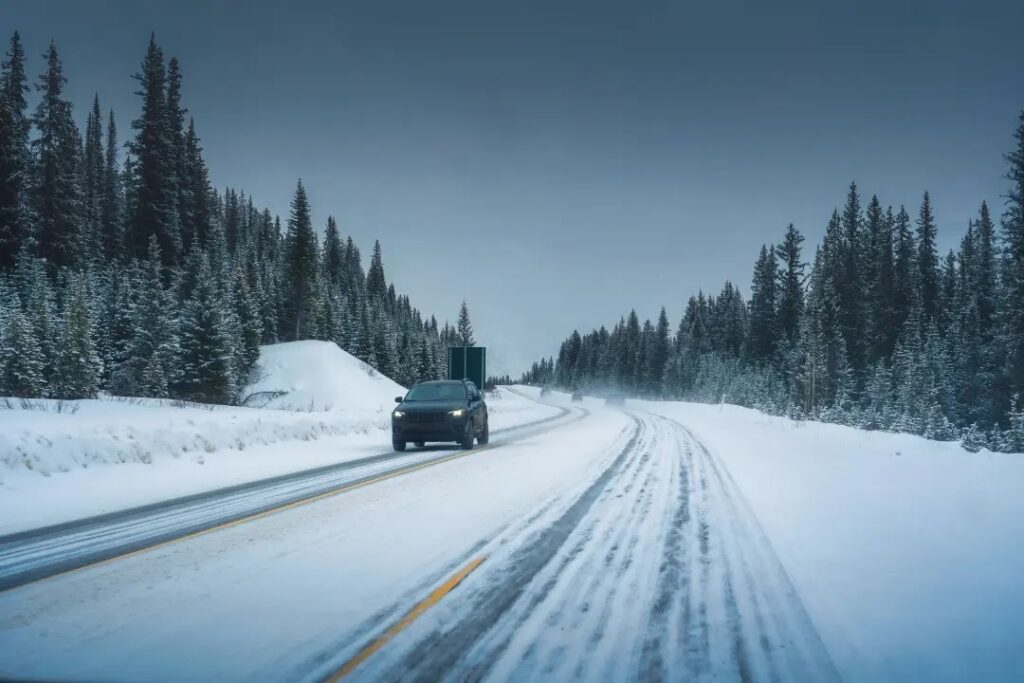
Best Practices For Driving In Snow, Ice, And Fog
Each winter surface needs a slightly different approach. On snow, steer smoothly and accelerate gently; use engine braking where you can and avoid sudden inputs, because tyre grip is limited.
On ice, drive very slowly and make small, deliberate steering corrections. If you skid, steer into the skid and avoid heavy braking unless your car has ABS (which needs firm pressure). In fog, drop your speed, use fog lights if visibility is seriously reduced, and keep windows clear with heater/defog settings and winter washer fluid.
Spend some low-speed practice time in a safe area to build confidence with controlled braking and steering, and always pick an escape route at junctions by identifying a safe place to stop. These techniques reduce the chance of an incident and help you choose whether to continue or wait for better conditions.
Planning Your Route For Winter Weather Conditions
Good route planning balances safety, extra time, and contingency options so you can stop safely if conditions worsen. Check weather forecasts and live traffic before you leave and favour main roads that are likely to be gritted; coastal lanes and shaded pockets are more prone to black ice, so plan alternatives inland when freezing is forecast.
Add at least 20–30% extra journey time on longer trips and locate safe rest stops and towns where you can pause if needed. Share your route and estimated arrival with a contact and set check-in times so someone knows your plans; carry a charged phone and power bank. This preparation reduces surprises and helps you respond if your vehicle stops working in the cold.
- Use official weather and traffic resources for pre-trip checks.
- Prefer gritted main roads and avoid small lanes in freezing conditions wherever possible.
- Set check-in times with a friend or family member and identify safe pull-over points along your route.
These planning steps create breathing room and reduce risk, preparing you for what to do if your car breaks down.
Why Is Reds Recovery Services the Trusted Winter Roadside Assistance Choice in Kent?
Reds Recovery Services offers the practical benefits drivers need in winter: local, Kent-focused coverage for faster response times; round-the-clock availability; and a range of services from on-scene jump starts to full vehicle transport.
Local knowledge matters; our teams know which lanes are prone to frost and where recovery access is straightforward, and that speeds up the job and reduces time spent in the cold. Whether it’s a battery, a vehicle stuck in snow, or a car that needs transporting, we bring the right equipment and trained staff to resolve the issue safely and quickly.
What Makes Reds Recovery Services Reliable For Winter Breakdowns
Reliability comes from quick local response, appropriate equipment, and experience with a wide range of vehicles. Reds Recovery Services works on cars, 4x4s, and vans, giving flexibility for family and commercial needs.
Our 24/7 operation covers nights, early mornings, and busy holiday periods when breakdowns still happen, reducing the stress of long waits in cold weather.
For technical recoveries, winching from verges, safe jump starts, or long-distance transport, matching the right unit and trained staff to the job makes the difference between a short delay and a prolonged roadside issue.
How 24/7 Availability Benefits Kent Drivers In Winter Emergencies
Round-the-clock cover is especially useful in winter, when low temperatures and limited daylight mean incidents can happen at any hour. A 24/7 service reduces waiting time and gives peace of mind for drivers who travel outside normal business hours or through isolated rural parts of Kent.
A late-night battery failure or an early-morning freeze can be more than an inconvenience; quick recovery prevents long exposure to the cold. Combining continuous availability with local reach and a full service mix makes a named recovery provider a practical safety net when pre-trip checks and sensible driving aren’t enough.
Frequently Asked Questions
What Should I Do If I Get Stuck In Snow During My Winter Road Trip?
If you become stuck in snow, stay calm and prioritise safety. Clear snow from around each tyre and use a shovel to make a path. Spread grit or sand in front of the tyres for traction, then gently rock the vehicle back and forth to build momentum, avoiding spinning the wheels hard, which can dig you in deeper. If these steps don’t work or conditions are unsafe, call a professional recovery service.
How Can I Improve My Visibility While Driving In Foggy Conditions?
In fog, slow down and use dipped headlights or fog lights; high beams will reflect and worsen your vision. Keep windows clear with the heater/defog setting and winter-grade washer fluid. Maintain a larger following distance to allow extra stopping time. If visibility becomes dangerously low, pull over to a safe place and wait until conditions improve.
What Are The Signs That My Car Battery May Fail In Winter?
Signs of a weak battery include slow engine cranking, dim headlights, and electrical quirks with accessories. A resting voltage below about 12.4 volts is a good indicator that the battery should be tested or replaced. Corroded terminals or a battery older than three years are also reasons to have it checked before winter arrives.
How Can I Ensure My Tyres Are Ready For Winter Driving?
Check tyre tread depth, aim for at least 3 mm for better grip on wet and icy roads, and look for uneven wear that could signal alignment problems. Set tyre pressures to the manufacturer’s cold-weather recommendations, since pressure falls with temperature. If you expect severe conditions, consider winter tyres designed for snow and ice.