
Breakdown anxiety is the worry about being left stranded or feeling unsafe if your car fails. This guide gives clear, practical steps to ease that fear: spot the psychological triggers, build simple maintenance and emergency-kit habits, follow a short on-the-road safety routine, and use local recovery services when you need a safety net.
We cover both the mental and practical sides of breakdowns so you can rebuild confidence on Kent’s roads. Expect short checklists, quick how-to steps that work well for voice search, and local advice that highlights the value of fast, professional recovery when self-help isn’t enough.
Read on for signs of anxiety, maintenance priorities, an emergency-kit checklist, a numbered roadside procedure, and how a Kent recovery provider can get you back on the move. Everything is written in plain language with practical examples so you can act quickly when worry or a real breakdown strikes.
What Causes Car Breakdown Anxiety and How Can You Recognise It?
Breakdown anxiety shows up when drivers fear losing control, safety, or mobility because the car might fail. It usually comes from perceived risk, past bad experiences, and uncertainty about whether help will arrive. That worry triggers stress, racing thoughts, muscle tension, and avoidance, which makes driving feel harder.
Spotting these signs early lets you treat the fear as something you can manage, not an inevitable fate. Once you understand the triggers, you can select the appropriate practical and psychological tools to mitigate risk and worry.

Common Triggers of Breakdown Fear for Drivers
Drivers often have specific triggers that ramp up breakdown anxiety, and naming them shows what to tackle first. Battery warning lights, sudden power loss, or electrical faults can cause immediate panic because they feel abrupt and out of control.
Tyre problems, punctures, or rapid deflation, are frightening at speed or on narrow lanes. Driving alone at night or on unfamiliar rural roads makes people feel vulnerable because help seems further away. Identifying these triggers helps you plan targeted prevention.
- Battery warning lights: sudden alerts that suggest electrical problems and cause instant concern.
- Tyre punctures or blowouts: a fast loss of control that’s especially scary at speed.
- Engine or oil warnings: these can feel technically complex, increasing uncertainty.
- Night or remote driving: being far from help raises perceived danger.
Breakdown Anxiety and Your Driving Confidence
Breakdown anxiety changes how people drive in ways that can lower confidence and sometimes increase risk, creating a feedback loop: anxiety harms performance and then seems to prove itself. Some drivers avoid long trips or motorways, which limits day-to-day life and raises anticipatory worry.
Hypervigilance can feel protective, but also distracts and slows reactions. Building a short emergency routine and doing quick checks shifts control back to you. Small, regular habits reduce worry and make longer trips feel doable again.
What Proactive Steps Can Reduce the Fear of Vehicle Breakdowns?
Proactive steps lower both the chance of a breakdown and the mental load of “what if” thinking. Regular, simple checks plus a compact emergency kit give you practical control and reduce anxiety. Target the most common failure points and keep a trusted recovery option in your contacts.
The sections below outline the maintenance tasks that matter and list the essential kit items, followed by a quick comparison to help you prioritise easy checks. Focus on the items that most often cause roadside failures: battery, tyres, fluids, and lights. These checks take only minutes, but prevent many common problems.
Monthly tyre pressure and tread checks avoid blowouts; regular battery checks catch failing cells before they leave you stranded. Scheduled servicing and occasional diagnostics pick up intermittent faults early, which builds confidence that your car is reliable.
- Tyre pressure and tread: check monthly to reduce puncture and blowout risk.
- Battery health: Carry out a visual check and a voltage test every few months.
- Fluid levels (oil, coolant): top up as needed, especially before long trips.
- Lights and indicators: do a quick visual check weekly to ensure visibility and legality.
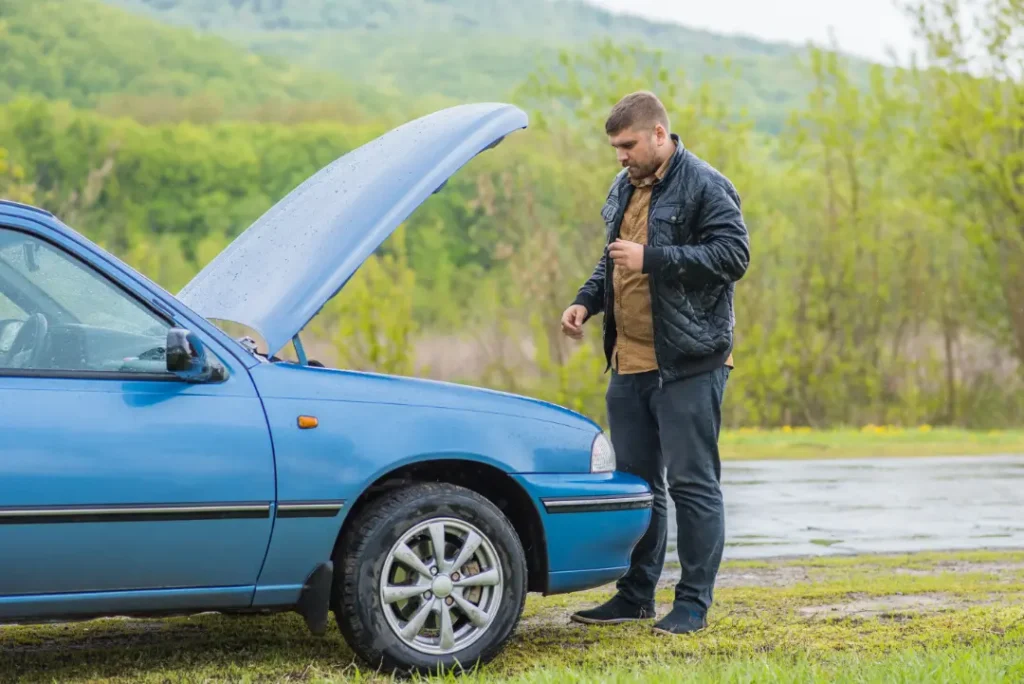
Preventive Maintenance and the Reduction of Automotive Breakdowns
Sudden vehicle breakdowns can be reduced with a preventive maintenance approach, and research suggests that structured schedules and predictive work can lower breakdown rates even further.
“Simulating Preventive Maintenance Schedule in an Automotive Industry to Reduce Breakdowns”, N. Rajhans, 2018.
Maintenance priority table: the table below compares simple checks so you can decide what to do first based on how often they’re needed, the time they take, and the safety benefit.
| Check | Frequency | Benefit |
|---|---|---|
| Tyre pressure & tread | Monthly | Reduces blowout risk and improves fuel economy |
| Battery health check | Every three months | Prevents unexpected electrical failure |
| Fluid levels (oil, coolant) | Before long trips and monthly | Protects the engine and helps avoid overheating |
| Lights & indicators | Weekly | Ensures visibility and avoids legal issues |
Short, regular checks give strong safety benefits and help reduce pre-trip worry. Make these habits part of your routine to keep breakdowns less likely and regain control over your journeys.
Regular Car Maintenance to Prevent Breakdowns
Regular maintenance prevents many common roadside failures by catching wear and early faults before they grow into breakdowns. A reliable routine—tyre checks, battery inspections, fluid top-ups, and light tests—creates predictable reliability and lowers the uncertainty that fuels anxiety.
Simple actions, like topping up coolant before a long drive or replacing a weak battery, remove major worry triggers. When maintenance is consistent, recovery services become a backup rather than your first line of defence.
Essential Items for Your Emergency Car Breakdown Kit
A compact emergency kit gives you the tools to stay safe and calm while you wait for help. Prioritise items that save space and add the most utility: a high-visibility jacket and warning triangle for visibility; a reliable torch and spare batteries for night incidents; jump leads or a portable jump starter for battery faults; plus a basic toolkit, gloves, and a phone charger.
A bottle of water and warm layers help comfort you during delays. Keep documents and insurance details together for quick access.
- High-visibility jacket and warning triangle: improve safety when stopped.
- Torch with spare batteries: essential for inspections after dark.
- Jump leads or a portable starter: solve common battery problems.
- Phone charger, water, and warm layers: reduce discomfort while waiting for help.
Emergency kit mini-table: the table below explains each item’s purpose and gives a quick tip to keep it ready when needed.
| Item | Purpose | Quick tip |
|---|---|---|
| Jump leads/portable starter | Restart a flat battery | Store cables coiled and labelled for quick use |
| High-vis jacket | Increase visibility | Keep within easy reach, not buried under other items |
| Torch & batteries | Inspect at night | Test regularly and replace batteries annually |
| Warning triangle | Warn other road users | Place at a safe distance behind the vehicle when stopped |
What Should You Do During a Car Breakdown to Stay Safe and Calm?
When a breakdown happens, following a short, practised sequence reduces panic and keeps you safe. Prioritise personal safety, make the vehicle visible, and communicate clearly. Quick vehicle breakdown actions, pulling into a safe spot if you can, turning on hazard lights, and using a warning triangle—cut collision risk.
Check for a simple fix (for example, fitting a spare tyre), but don’t attempt risky repairs on busy roads. If you can’t fix it quickly and safely, call for professional help. The numbered sequence below is voice-search-friendly and designed to guide you when your heart rate is high.
- Ensure personal safety: pull over to a safe layby or verge if possible and switch on hazard lights.
- Make the vehicle visible: put on a high‑vis jacket and place a warning triangle at a safe distance.
- Assess the issue briefly: look for obvious problems (smoke, an oil leak, or a flat tyre); avoid complex repairs.
- Communicate your position and situation to roadside assistance or a trusted contact, giving clear location details.
- Wait in a safe spot away from traffic if the scene is unsafe; stay calm and conserve your phone battery.
Working through this ordered routine turns a chaotic moment into simple steps and reduces stress by focusing your attention on one task at a time.
Action steps table: the table below summarises on-scene actions, why they matter, and how long they usually take so you can scan it under stress.
| Action | Why it matters | Estimated time/safety benefit |
|---|---|---|
| Pull to a safe location & switch on hazards | Reduces collision risk | 1–2 minutes; immediate safety |
| High-vis & triangle | Increases visibility | 1–2 minutes; prevents secondary incidents |
| Quick problem check | Determines fixability | 2–5 minutes; informs next steps |
| Call for professional help | Ensures expert resolution | Varies; reduces anxiety and risk |
Step-by-Step Actions to Take When Your Car Breaks Down
When your car fails, a short rehearsed sequence keeps everyone safe and reduces panic. Stop in a safe spot, make the scene visible, and check for simple fixes. If you can’t do a safe, quick repair, focus on getting occupants to safety, telling someone your exact location, and waiting for assistance.
Note basic facts (time, location, symptoms) for later diagnosis and to keep your mind clear on tasks. Mentally practising this sequence before a journey makes the real event feel more familiar and less threatening.
Roadside Assistance for Anxious Drivers in Kent
Professional roadside assistance offers technical help, practical reassurance, and logistics that lower both immediate danger and ongoing anxiety. Knowing what to expect makes calling for help less stressful. Typical services include jump starts, vehicle recovery, and towing to a garage or safe location; technicians bring the right tools and experience to fix things quickly.
Local operators who know Kent’s roads usually arrive sooner and give better arrival estimates, which directly eases the worry about long waits. When self-help isn’t safe or possible, contacting a recovery provider turns a frightening situation into a managed service call.
After you follow the safety steps above, Reds Recovery Services is a Kent-based option that offers timely help when you need a reliable safety net. Reds Recovery Services provides 24/7 vehicle recovery, jump starts, and car transport across Kent to reduce the time you spend stranded.
Their local focus and fast response aim to shorten waits and improve outcomes. Pairing a known recovery provider with regular maintenance and an emergency kit gives you a dependable backup, so you feel supported even when things go wrong.
How Does Reds Recovery Services Provide Peace of Mind for Breakdown Anxiety?
Reds Recovery Services eases breakdown anxiety by offering an always-on vehicle breakdown recovery that reduces the uncertainty of being stranded. Reliable availability and timely help calm immediate panic. With 24/7 coverage across Kent and practical services like jump starts and UK-wide vehicle transport for planned moves, Reds Recovery acts as a predictable safety net when in-car measures aren’t enough.
Knowing trained technicians with the right tow equipment will respond turns the abstract fear of being stranded into a clear contingency plan. That reassurance helps drivers make confident choices about journeys and cuts down avoidance tied to breakdown worry.
- 24/7 availability: Immediate assistance any time reduces worry about night or off‑peak incidents.
- Fast local response: Kent‑based operations aim to shorten waiting times and restore mobility quickly.
- Comprehensive services: jump starts, recovery, and car transport cover the most common problems.
These benefits mean professional recovery is more than a last resort — it’s a key part of layered preparedness that supports confident driving and lowers long‑term anxiety.
Benefits of 24/7 Breakdown Recovery and Jump Start Services
Round-the-clock recovery reduces the most stressful parts of a roadside incident: uncertainty and isolation. Knowing help is available at any hour eases anticipatory anxiety. Professional technicians arrive with the right tools to perform safe jump starts, recover vehicles, and manage transport to a garage, which is far safer than improvised roadside fixes.
Fast local response and experienced handling also cut secondary delays and make the next steps clear, helping you feel supported instead of stranded. Together, these services turn a high-stress situation into a managed process that protects safety and reduces mental strain.
Reds Recovery for Emergency Car Breakdown Help in Kent
Reds Recovery Services is a local, fast-response partner that complements your preventive routines by providing reliable recovery and transport when needed. Their Kent focus and 24/7 availability aim to reduce wait times and deliver practical solutions, jump starts, car and van recovery, and vehicle transport, so you can get back to safety quickly.
Picking a trusted recovery partner completes your contingency plan: maintain your vehicle, carry an emergency kit, and call professional help when required. If you need assistance after taking safety steps, contact Reds Recovery Services to arrange prompt support and reduce the time you spend stranded.
This last layer, professional recovery combined with basic maintenance and a compact emergency kit, builds strong preparedness that addresses both the causes and the consequences of breakdown anxiety.
Frequently Asked Questions(FAQs)
What psychological techniques can help manage breakdown anxiety?
Several practical techniques can help. Cognitive-behavioural strategies let you spot and reframe negative thoughts about breakdowns. Simple breathing exercises and short mindfulness or grounding practices calm your body during stressful moments. Visualisation—running through a step-by-step breakdown routine in your head—builds familiarity and confidence.
Practising these methods regularly makes them easier to use if anxiety strikes on the road.
How can I prepare for a breakdown in unfamiliar areas?
Preparation reduces worry in unknown places. Keep your car well-maintained and carry an emergency kit. Save local recovery numbers in your phone and download navigation apps that show nearby services.
Tell a friend or family member your route and expected arrival time. These small steps give you a support system and clear options if something goes wrong far from home.
What should I do if I experience a panic attack while driving?
If you feel a panic attack coming on, prioritise safety. Pull over to a safe spot as soon as you can and switch on your hazard lights. Focus on slow, steady breaths to calm your heart rate. Use grounding techniques—name things you can see, hear, or touch—to redirect attention.
If needed, call a trusted contact or roadside assistance for support. It’s fine to take a break until you feel steady enough to continue.
How can I educate myself about common car issues to reduce anxiety?
Learning the basics helps a lot. Read your owner’s manual for maintenance and troubleshooting tips. Watch reputable how‑to videos and visit trusted automotive forums for straightforward guidance.
Consider a basic car maintenance course to get hands‑on practice. The more you know about common problems and simple fixes, the more confident you’ll feel on the road.